

TMS Therapy vs. Antidepressants: Which Treatment is Right for You?
When deciding between TMS therapy and antidepressants, it is important to understand how each treatment works and which option may best fit your needs. TMS therapy is a non-invasive treatment that uses targeted magnetic pulses to stimulate areas of the brain involved in mood regulation, while antidepressants work through chemical pathways in the body. At Frisco Quick Care, Dr. Jehangir W. Gowani, MD, FACP, FAAP, and his experienced team provide personalized evaluations to help patients explore whether TMS therapy, antidepressants, or a combined treatment approach may be right for them. For more information, contact us or schedule an appointment online. We are conveniently located at 8845 Gary Burns Dr, Ste 180, Frisco, TX 75034.
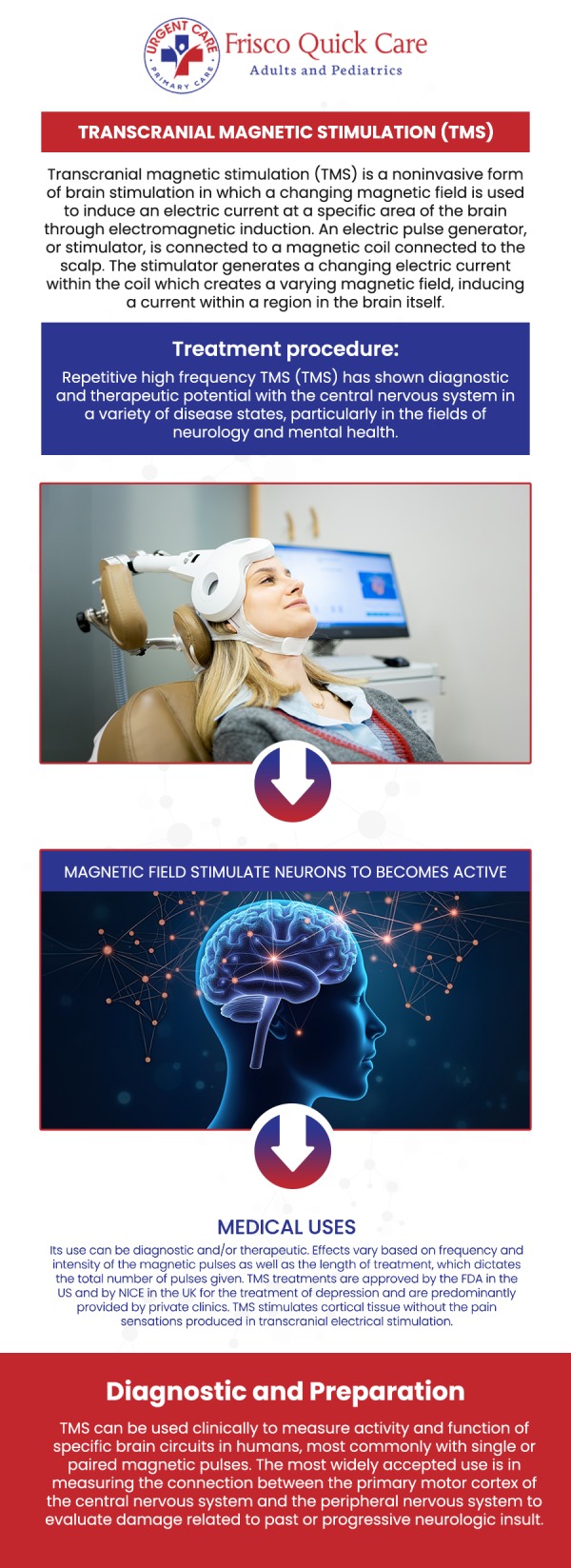
Table of Contents:
What is the difference between TMS therapy and antidepressants?
Is TMS therapy safer than antidepressants?
Can TMS therapy help if antidepressants have not worked?
Should I choose TMS therapy or antidepressants for depression treatment?
Understanding TMS Therapy vs. Antidepressants With Board-Certified Dr. Jehangir W. Gowani and the Team at Frisco Quick Care in Frisco, TX
TMS therapy and antidepressants are both used to help manage mental health symptoms, but they work in very different ways. While antidepressants are taken as medication and affect chemical pathways throughout the body, TMS therapy is a non-invasive treatment that uses targeted magnetic pulses to stimulate specific areas of the brain. Understanding these differences can help patients make informed decisions with their healthcare provider.
• Treatment Method: TMS therapy is a non-invasive procedure that uses targeted magnetic pulses to stimulate specific areas of the brain. Antidepressants are medications taken by mouth that work through chemical pathways in the body.
• How It Works: TMS focuses directly on brain circuits involved in mood, depression, or OCD-related symptoms. Antidepressants work by affecting neurotransmitters, such as serotonin, norepinephrine, or dopamine.
• No Daily Medication: TMS does not require taking a daily pill. Instead, patients attend scheduled treatment sessions over several weeks.
• Side Effects: TMS is generally well-tolerated and may cause mild scalp discomfort or headache. Antidepressants may cause body-wide side effects because they are absorbed through the bloodstream.
• No Anesthesia Needed: TMS therapy does not require anesthesia or sedation, and patients remain awake during treatment.
• Personalized Treatment Plan: TMS settings are customized based on the patient’s needs, while antidepressant treatment may involve adjusting medication type or dosage over time.
• When It May Be Considered: TMS may be an option for patients who have not found enough relief with medication or who have difficulty tolerating antidepressant side effects.
If you’re struggling with depression, our compassionate team at Frisco Quick Care is here to help you explore your options. We’ll work with you to develop a treatment plan that fits your individual needs and lifestyle.
TMS therapy is not automatically “safer” than antidepressants for every patient, but it may be better tolerated by some people because it is non-invasive and does not circulate through the whole body like medication. Antidepressants can be very helpful for many patients, but they may cause side effects such as nausea, headaches, sleep changes, weight changes, or sexual side effects. TMS therapy works by using targeted magnetic pulses to stimulate specific brain areas, and common side effects are usually mild, such as scalp discomfort or headache.
The best option depends on each patient’s diagnosis, symptom severity, medical history, treatment response, and personal goals. Some patients may benefit from TMS alone, while others may need medication, therapy, or a combined treatment plan. At Frisco Quick Care, Dr. Jehangir W. Gowani and his experienced team evaluate each patient carefully to determine whether TMS therapy may be an appropriate option and provide guidance throughout the treatment process.
TMS therapy may help some patients when antidepressants have not provided enough relief or have caused difficult side effects. Unlike antidepressants, which work through chemical pathways throughout the body, TMS therapy uses targeted magnetic pulses to stimulate specific areas of the brain involved in mood regulation or OCD-related symptoms. It is non-invasive, does not require anesthesia, and is typically performed as a series of in-office sessions.
TMS is not the right choice for every patient, so a careful medical evaluation is important before starting treatment. A provider will review your diagnosis, treatment history, current medications, symptoms, and overall health to decide whether TMS may be appropriate. At Frisco Quick Care, Dr. Jehangir W. Gowani and his experienced team help patients explore TMS therapy as a personalized treatment option when traditional approaches have not worked well enough.
Choosing between TMS therapy and antidepressants for depression treatment depends on your symptoms, medical history, previous treatment response, side effects, and personal goals. Antidepressants are often part of the first treatment plan for moderate to severe depression, while TMS therapy may be considered when medication has not provided enough relief or has caused difficult side effects. TMS is non-invasive and uses targeted magnetic pulses to stimulate areas of the brain involved in mood regulation.
A provider can help determine whether TMS therapy, antidepressants, talk therapy, or a combined approach is best for your condition. Patients should not stop or change antidepressants without medical guidance, even if they are considering TMS. At Frisco Quick Care, Dr. Jehangir W. Gowani and his experienced team review each patient’s history and symptoms to create a personalized depression treatment plan that supports safe, informed care.
Understanding TMS therapy vs. antidepressants begins with knowing that both options can support depression treatment, but they work in different ways. Dr. Jehangir W. Gowani, MD, FACP, FAAP, is board-certified in internal medicine and pediatrics, with additional certification in sleep medicine. At Frisco Quick Care in Frisco, TX, Dr. Gowani and his experienced team help patients better understand whether antidepressants, TMS therapy, or a combined care approach may be appropriate based on symptoms, treatment history, side effects, and personal health goals.
TMS therapy is a non-invasive treatment that uses targeted magnetic pulses to stimulate areas of the brain involved in mood regulation, while antidepressants work through chemical pathways in the body. Dr. Gowani and the team at Frisco Quick Care provide personalized evaluations, clear education, and ongoing support to help patients make informed decisions about their depression treatment options. With compassionate care and medical guidance, Frisco Quick Care helps patients explore treatment choices designed to support improved emotional wellness and daily functioning.
For more information, contact us or schedule an appointment online. We are conveniently located at 8845 Gary Burns Dr, Ste 180, Frisco, TX 75034. We serve patients from Frisco TX, Little Elm TX, Prosper TX, The Colony TX, McKinney TX, Hunters Glen, TX, and surrounding areas.

Check Out Our 5 Star Reviews


Additional Services You May Need
▸ Abrasions
▸ ADHD Evaluation and Treatment for Adults
▸ ADHD Evaluation and Treatment for Pediatric
▸ Allergies
▸ Annual Physical Exam
▸ Arthritis
▸ Asthma
▸ Behavioral Health Services
▸ Bronchiolitis
▸ Cholesterol
▸ Chronic Pain
▸ Covid-19
▸ CPAP Titration
▸ Dermatology Services
▸ Diabetes
▸ Ear Infection
▸ Eye Infection
▸ Flu Treatment
▸ Flu Shot
▸ General Vision Test
▸ Exomind Therapy
▸ Hypertension
▸ Hypothyroidism
▸ Influenza
▸ Insomnia
▸ Laboratory Testing
▸ Medical Weight Loss
▸ Minor Cuts
▸ Minor Fractures
▸ Minor Gastrointestinal Illness
▸ Minor Injury Treatment
▸ Mononucleosis
▸ Mounjaro
▸ Obesity
▸ Ozempic
▸ Pediatrics Care
▸ Pink Eye
▸ Polysomnography
▸ Phentermine Oral Tablets
▸ Pre Op Physical
▸ Rashes and Dermatitis
▸ Respiratory Syncytial Virus
▸ Sinusitis
▸ Sleep Apnea
▸ Sleep Disorders
▸ Sports Injuries
▸ Sports Physicals
▸ Sprains and Strains
▸ Std Testing
▸ Strep Throat
▸ Throat Infection
▸ Telehealth
▸ TMS Therapy for Depression
▸ TMS Therapy for Excessive Eating
▸ TMS Therapy for Anxiety
▸ TMS Therapy for OCD
▸ Urgent Care
▸ Urinary Tract Infection
▸ Vaccinations
▸ Weight Management
▸ Wegovy
▸ Walk-In Medical Care
▸ Zepbound

Additional Services You May Need
▸ Abrasions
▸ Allergies
▸ Annual Physical Exam
▸ Arthritis
▸ Asthma
▸ Behavioral Health Services
▸ Bronchiolitis
▸ Cholesterol
▸ Chronic Pain
▸ Covid-19
▸ CPAP Titration
▸ Dermatology Services
▸ Diabetes
▸ Throat Infection
▸ Ear Infection
▸ Eye Infection
▸ Flu Treatment
▸ Flu Shot
▸ General Vision Test
▸ Hypertension
▸ Hypertension
▸ Hypothyroidism
▸ Influenza
▸ Insomnia
▸ Laboratory Testing
▸ Medical Weight Loss
▸ Minor Cuts
▸ Minor Fractures
▸ Minor Gastrointestinal Illness
▸ Minor Injury Treatment
▸ Mononucleosis
▸ Mounjaro
▸ Obesity
▸ Ozempic
▸ Pediatrics Care
▸ Pink Eye
▸ Polysomnography
▸ Phentermine Oral Tablets
▸ Pre Op Physical
▸ Rashes and Dermatitis
▸ Respiratory Syncytial Virus
▸ School Physicals
▸ Sinusitis
▸ Sleep Apnea
▸ Sleep Disorders
▸ Sports Injuries
▸ Sports Physicals
▸ Sprains and Strains
▸ Std Testing
▸ Strep Throat
▸ Telehealth
▸ TMS Therapy for Depression
▸ TMS Therapy for Excessive Eating
▸ TMS Therapy for Anxiety
▸ TMS Therapy for OCD
▸ Urgent Care
▸ Urinary Tract Infection
▸ Vaccinations
▸ Weight Management
▸ Wegovy
▸ Zepbound
▸ TMS Therapy for Depression
▸ Exomind Therapy
▸ Walk-In Medical Care
 8845 Gary Burns Dr, Ste 180, Frisco, TX 75034
 Call Now
 Mon - Fri: 9am - 7pm, Sat - Sun: 9am - 5pm


 Send Text
 How May I Help You?